How to Inspect a Second Hand Tissue Machine Before Purchase
A second hand tissue machine can be an excellent investment — but only if it is mechanically sound and properly tested. The difference between a smart purchase and an expensive mistake comes down to one thing: a thorough inspection before you pay.
This guide walks you through a professional, system-by-system inspection of a used tissue converting machine. Whether you are buying a toilet paper rewinder, a facial tissue folding machine, a napkin machine, or a full production line, these checks will help you judge the real condition of the equipment and avoid hidden problems.
First, Understand the Machine You Are Inspecting
A tissue converting line is not a single machine. It is a series of connected units, and each one wears differently. Before inspecting, know which sections your machine includes.
A typical toilet paper or kitchen towel line runs in this order: an unwind stand feeds the parent reel, an embossing unit adds texture and bulk, a laminator applies glue between plies, a rewinder winds the paper into logs around a core, a tail sealer glues the loose end, and a log saw cuts the logs into finished rolls. Packaging machines follow.
A typical facial tissue or napkin line uses an interfolder or folding unit, a cutting section, and a cartoning or packing machine.
Knowing the layout tells you exactly where to look. Now inspect each system in turn.
1. Frame, Structure, and Alignment
The frame is the foundation of the whole machine. Problems here are the hardest and most expensive to fix.
- Check the main frame and side plates for cracks, welds, deformation, or signs of past repair.
- Look for rust beyond surface level — deep corrosion weakens the structure.
- Confirm the machine sits level and stable, with no twisting between sections.
- Inspect mounting points and foundation bolts for wear or movement.
Why it matters: A misaligned or distorted frame causes web wander, uneven tension, and poor product quality that no amount of fine-tuning will solve.
2. Rollers, Cylinders, and Embossing Units
Rollers do the real work of moving and shaping the paper, so they wear constantly.
- Inspect all rubber-covered rollers for grooving, flat spots, cracks, or hardening. Worn rubber loses grip and emboss depth.
- Check steel and engraved embossing rollers for damaged or flattened patterns. A worn pattern means thinner, lower-bulk product.
- Confirm the embossing pressure system (pneumatic or mechanical) holds steady pressure and releases cleanly.
- Spin each roller by hand and feel for eccentricity, noise, or rough bearings.
Why it matters: Roller and emboss condition directly controls the look, softness, and bulk of the finished tissue — the qualities your customers judge first.
3. Cutting and Perforation Systems
Cutting components are wear parts by nature, so check them carefully and budget for replacement.
- On a log saw, inspect the circular blade for sharpness and the grinding stones that keep it sharp. Check blade run-out, because a wobbling blade produces fuzzy, crushed, or angled cuts.
- On the perforation unit, examine the perforating blade and the anvil roll. The clearance between them controls sheet separation. Worn parts cause tearing, incomplete perforation, or sheets that will not separate.
- On a facial tissue cutter or interfolder knife, check the blade edge and the counter-knife for nicks and even wear.
Why it matters: Dull or misadjusted cutting parts create dust, ragged edges, and rejected product. These are common wear items, so ask what has been replaced and what will need replacing soon.
4. Drive, Transmission, and Bearings
This is the mechanical heart of the machine and a key indicator of overall health.
- Listen to each bearing during the trial run. Grinding, knocking, or whining signals wear.
- Check gearboxes for oil level, oil condition, and leaks around seals.
- Inspect belts, chains, couplings, and sprockets for stretch, cracking, or missing teeth.
- After running, carefully feel bearing housings — excessive heat points to a failing bearing.
Why it matters: Drive faults are often invisible at rest and only reveal themselves under load, which is why a running test is essential.
5. Electrical and Control System
On modern lines the control system is as important as the mechanics, and it is often the hardest part to repair after import.
- Identify the PLC and drive brand (such as Siemens, Mitsubishi, Delta, or similar) and confirm that spare parts and support are available in your country.
- Power up the HMI / touchscreen and confirm it responds and displays correctly.
- Test servo and inverter drives, motors, and the response of each axis.
- Verify that photocells, encoders, and sensors read correctly during operation.
- Inspect the electrical cabinet for clean wiring, proper labeling, and no scorching or improvised repairs.
Why it matters: A machine with an obsolete or undocumented control system can be impossible to service abroad, even if the mechanics are perfect.
6. Pneumatic and Lubrication Systems
These supporting systems are easy to overlook but cause frequent downtime when neglected.
- Pressurize the pneumatic system and listen for air leaks at fittings, hoses, and cylinders.
- Confirm air cylinders move smoothly and hold position.
- Check the FRL units (filter, regulator, lubricator) and that the compressed-air supply is clean and dry.
- Inspect the lubrication points and any auto-lube system for blockages.
Why it matters: Leaks and poor lubrication shorten the life of every moving part downstream.
7. Safety Systems
Never assume a used machine meets safety standards. Verify it directly.
- Test every emergency stop and confirm it cuts power immediately.
- Check that guards, covers, and interlocks are present and functional — especially around the log saw blade, which is a serious injury risk.
- Confirm light curtains or safety switches stop the machine when triggered.
Why it matters: Safety gaps put operators at risk and may block the machine from passing local compliance after installation.
The Trial Run: The Most Important Test
No static inspection replaces seeing the machine run. Insist on a full trial run, ideally at or near production speed.
During the trial run, watch for:
- Stable web tension with no wrinkling, tearing, or wandering.
- Consistent embossing and lamination across the full width.
- Clean, square cuts with minimal dust and no crushed edges.
- Reliable core loading, winding, and log transfer with no jams.
- Steady running without unusual noise, vibration, or repeated stops.
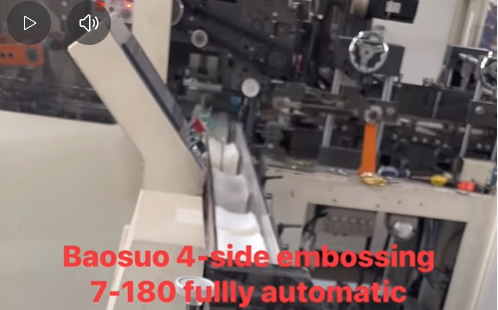
Ask for the trial run to be recorded on video, and request finished product samples or close-up footage so you can judge quality for yourself.
What to Ask Your Supplier
A trustworthy supplier will welcome these questions and answer them clearly:
- What was inspected, repaired, or replaced during reconditioning?
- What is the machine’s measured speed and output in the trial run?
- Which wear parts will need replacing soon, and are they available?
- Can you provide a test-run video, full specifications, and loading photos?
- What documentation comes with the machine for export and installation?
Red Flags to Watch For
Walk away, or ask much harder questions, if you see:
- A supplier who refuses or delays a trial-run video.
- Heavy rust, cracked frames, or obvious improvised repairs.
- An obsolete control system with no parts support.
- Vague answers about specifications, condition, or repair history.
Quick Inspection Checklist
| System | Key Checks |
|---|---|
| Frame & structure | Cracks, rust, alignment, level mounting |
| Rollers & embossing | Rubber wear, emboss pattern, pressure system |
| Cutting & perforation | Blade sharpness, run-out, blade-to-anvil clearance |
| Drive & bearings | Noise, heat, gearbox oil, belts and chains |
| Electrical & control | PLC brand, HMI, servo drives, sensors, wiring |
| Pneumatic & lubrication | Air leaks, cylinder action, clean dry air, lube points |
| Safety | E-stops, guards, interlocks, light curtains |
| Trial run | Tension, emboss, clean cuts, stable running |
Frequently Asked Questions
Can I inspect the machine remotely if I cannot travel? Yes. A detailed trial-run video, close-up photos of key components, and a written condition report let you assess most of these points without traveling.
Which parts wear out fastest on a tissue machine? Cutting blades, perforation blades and anvils, rubber rollers, and bearings are the most common wear items. Always ask what has been replaced recently.
Is an older machine with a known control brand better than a newer unknown one? Often, yes. A proven control system like Siemens or Mitsubishi is far easier to service and source parts for than an undocumented one.
Buy with Confidence
At Yichun Chuangcheng Machinery Equipment Co., Ltd., every used tissue machine is inspected system by system, reconditioned where needed, and trial-run on video before shipment. We share full specifications, repair details, and loading photos so you know exactly what you are buying.
Contact us today for a detailed condition report and a real test-run video of any machine in our inventory.
👉 Send your inquiry now and buy your next tissue machine with confidence.
Looking for a used tissue machine?
Get real test-run videos, full specs, and a fast FOB quote.
Get a Quote